Marie-Antoinette at the Conciergerie - Historical Visit Guide
Understand the final chapter of Marie-Antoinette's life through a historically grounded visit to the Conciergerie in Paris.
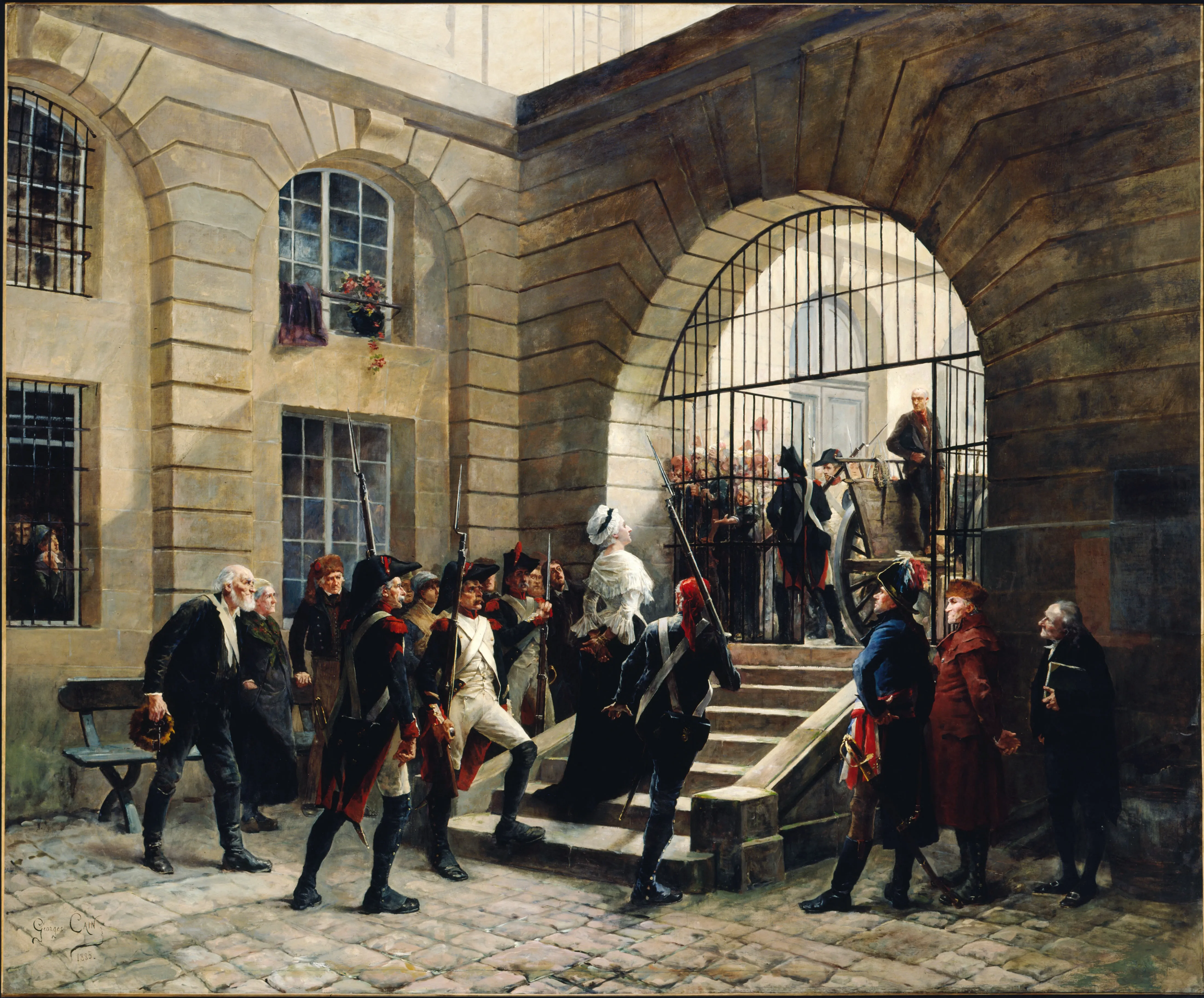
History at the Conciergerie is easy to sensationalize. Better to slow down and separate evidence, interpretation, and memory.
What happened here
Marie-Antoinette was transferred to the Conciergerie in 1793, tried by the Revolutionary Tribunal, and executed shortly after. The site preserves a memorial framework rather than a perfectly untouched prison layout.
Read with care
- Some spaces are reconstructed.
- Some narratives were reframed in later political periods.
- Emotional truth and archival certainty are not always identical.
| Layer | Question to ask |
|---|---|
| Original space | What is physically medieval or revolutionary? |
| Museum design | What was interpreted later? |
| Public memory | Why this story still resonates |
[!WARNING] Avoid assuming every object in view belongs to the exact 1793 moment.
A balanced way to visit
- Start with timeline panels.
- Move to the cell narrative.
- End in the memorial area without rushing.
Two myths to retire
- Myth: the entire prison is frozen exactly as in 1793.
- Myth: one room alone explains the trial's complexity.
The strongest visit is not the most dramatic one. It is the one that leaves you asking better questions about power, justice, and remembrance.
Keep myth and evidence in dialogue
As you move through the memorial spaces, it helps to hold two tracks at once. One track is archival: dates, transfers, trial mechanics, room functions. The other is emotional: what later generations needed this story to represent.
Neither track is complete on its own. Archive without memory can feel sterile; memory without evidence can become distortion. The Conciergerie asks you to balance both.
If you leave with fewer certainties but stronger historical questions, the visit succeeded.
Über den Autor

Paris Heritage Editor
Dieser Guide wurde fur Reisende geschrieben, die mehr als einen schnellen Fotostopp suchen. Die Sainte-Chapelle belohnt Neugier - unser Ziel ist es, historische Tiefe, kunstlerische Brillanz und praktische Hinweise so zu verbinden, dass dein Besuch wirklich nachwirkt.
Tags
Comments (0)
Loading comments...