Conciergerie Paris Guide - History, Key Rooms, Practical Tips
A detailed guide to the Conciergerie in Paris with historical context, must-see rooms, and planning advice for first-time visitors.
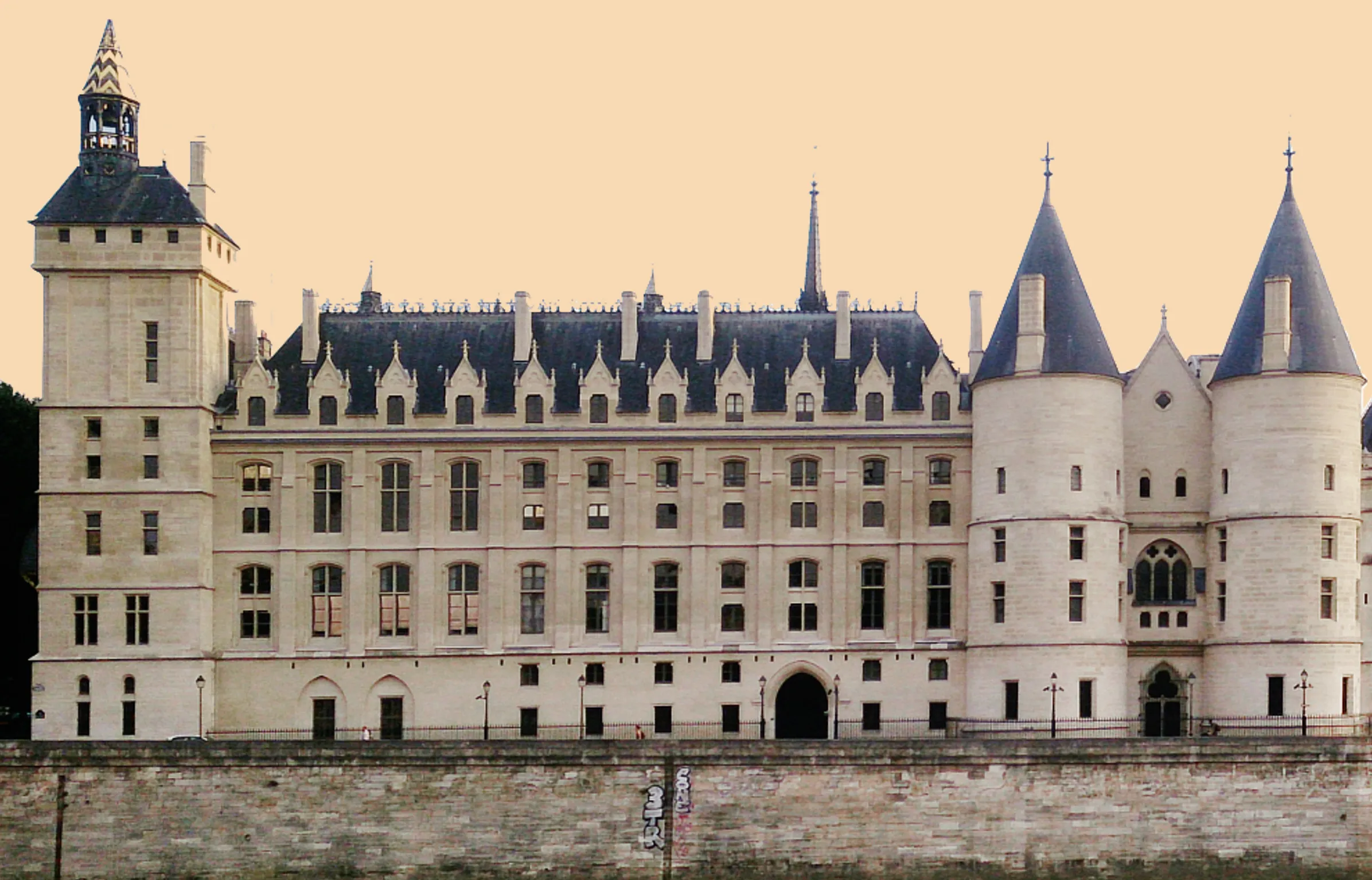
The Conciergerie is where palace grandeur and prison memory occupy the same walls. You feel that tension from the first hall.
Why this site matters
Before it became associated with Revolutionary trials, this was part of the royal palace complex. That layered identity is exactly what makes the visit powerful.
You are not walking through one era. You are walking through a stack of eras.
Must-see sequence
1) Salle des Gens d'Armes
One of the largest surviving medieval secular halls in Europe. Start here to calibrate scale.
2) Revolutionary spaces
Panels, reconstructed cells, and tribunal context explain how justice became theater.
3) Marie-Antoinette memorial zone
Quietly presented, emotionally heavy, and best approached after reading the timeline in full.
| Room | Suggested time |
|---|---|
| Salle des Gens d'Armes | 20 min |
| Interpretation galleries | 20 min |
| Memorial and final section | 20 min |
Visit strategy
- Combine with Sainte-Chapelle in one booking block.
- Read captions before audio extras for better chronology.
- Pause at each transition point: palace, prison, memory.
High-value photo spots
- Ribbed vault perspective in the grand hall
- Light and shadow in stone corridors
- Exterior towers near the river edge at blue hour
Final thought
The Conciergerie is not a checklist attraction. It is a place to understand how institutions, architecture, and fear can reshape a city within a few years.
How to leave with context, not just impressions
Before exiting, look back through one doorway and frame two eras in one glance: medieval stonework in the foreground, Revolutionary narrative in the background. That visual overlap is the most honest summary of the site.
If you have the energy, sit for five minutes afterward and write three short lines: what felt oldest, what felt most human, what felt most unsettling. These prompts anchor memory better than trying to remember every room name.
The Conciergerie rewards visitors who hold complexity instead of flattening it. It is both palace remnant and prison memory, both architecture and argument. That tension is not a flaw in the visit. It is the visit.
저자 소개

Paris Heritage Editor
이 가이드는 ‘빠른 인증 사진’ 이상의 경험을 원하는 여행자를 위해 작성되었습니다. 생트샤펠은 호기심에 보답하는 장소입니다. 역사적 깊이, 예술적 완성도, 실무 정보를 하나로 엮어, 내부에서 보내는 시간이 서두름이 아닌 의미 있는 체험이 되도록 돕는 것이 목표입니다.
Tags
Comments (0)
Loading comments...