Sainte-Chapelle vs Conciergerie Architecture - Medieval Power in Paris
Understand how Sainte-Chapelle and the Conciergerie express different faces of medieval authority through light, stone, and scale.
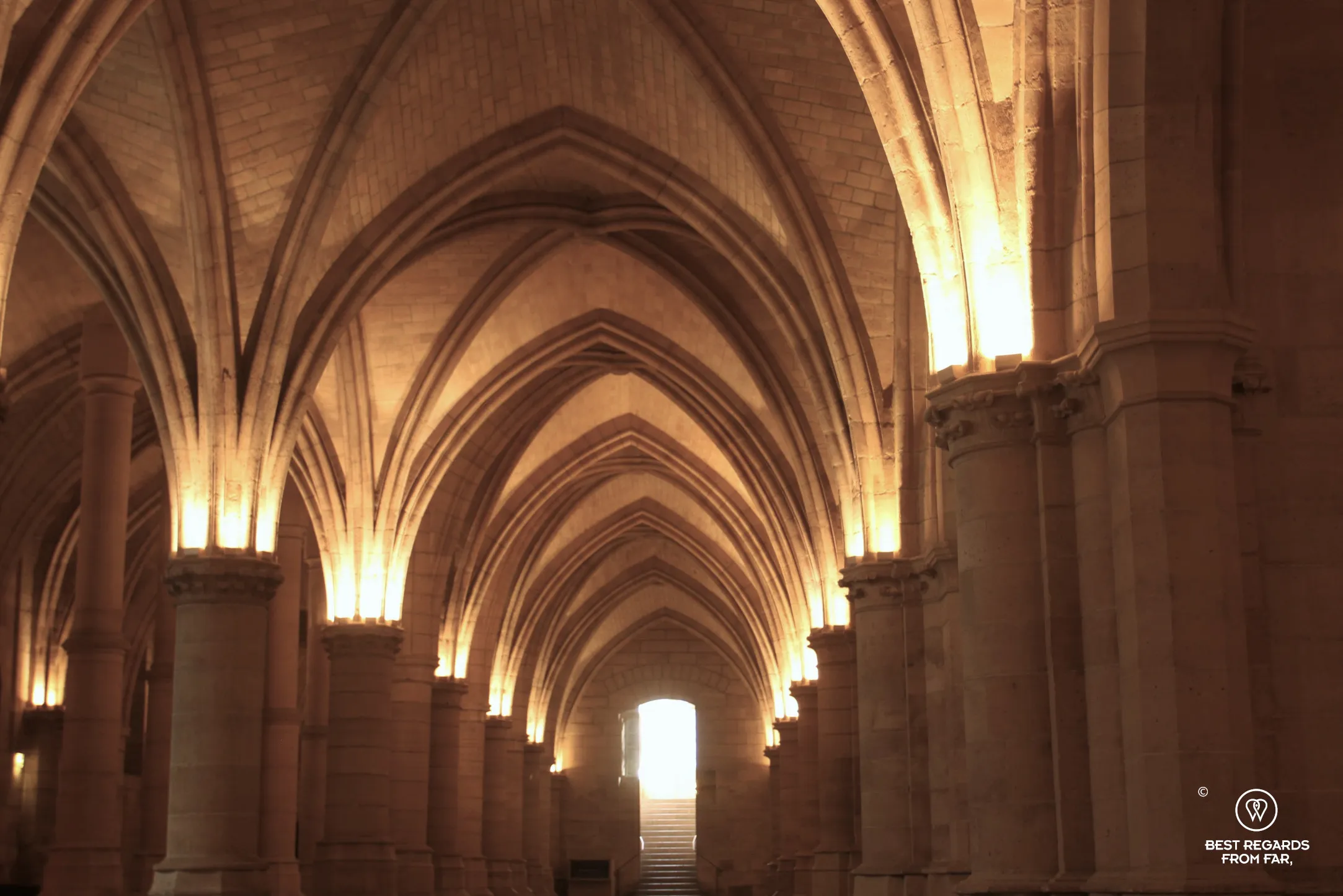
Place these monuments side by side and you see a political language written in architecture.
Sainte-Chapelle: authority as light
The upper chapel feels almost dematerialized. Walls shrink, glass expands, and monarchy aligns itself with sacred narrative.
Conciergerie: authority as mass
The great halls and prison layers communicate durability, administration, and control.
| Feature | Sainte-Chapelle | Conciergerie |
|---|---|---|
| Spatial effect | Vertical lift | Horizontal weight |
| Material message | Color and translucency | Stone and endurance |
| Emotional register | Awe | Gravity |
How to compare on site
- Stand still for one minute in each monument.
- Describe how your voice naturally changes.
- Note where your gaze settles first.
[!TIP] Architecture is not only what you see. It is also what it asks your body to do.
One-sentence takeaway
Sainte-Chapelle legitimizes through transcendence, while the Conciergerie legitimizes through institutional permanence.
Together, they form one of Europe's clearest urban lessons in medieval statecraft.
Compare with your body, not only your eyes
In Sainte-Chapelle, most people tilt their head upward and speak softer without realizing it. In the Conciergerie, posture levels out, steps lengthen, and voices often become practical. That physical change is architectural meaning in action.
Try noting your first instinct in each space: look up, look forward, slow down, move through. These reactions reveal how design directs behavior long before interpretation panels explain context.
By reading both sites through movement and emotion, the comparison becomes vivid and memorable instead of abstract.
关于作者

Paris Heritage Editor
这份指南写给不满足于“到此一拍”的旅行者。圣礼拜堂值得被好奇心慢慢打开:我们的目标,是帮助你把它的历史深度、艺术天赋与实用参观信息连成一体,让你的停留真正有意义,而非匆匆掠过。
Tags
Comments (0)
Loading comments...